
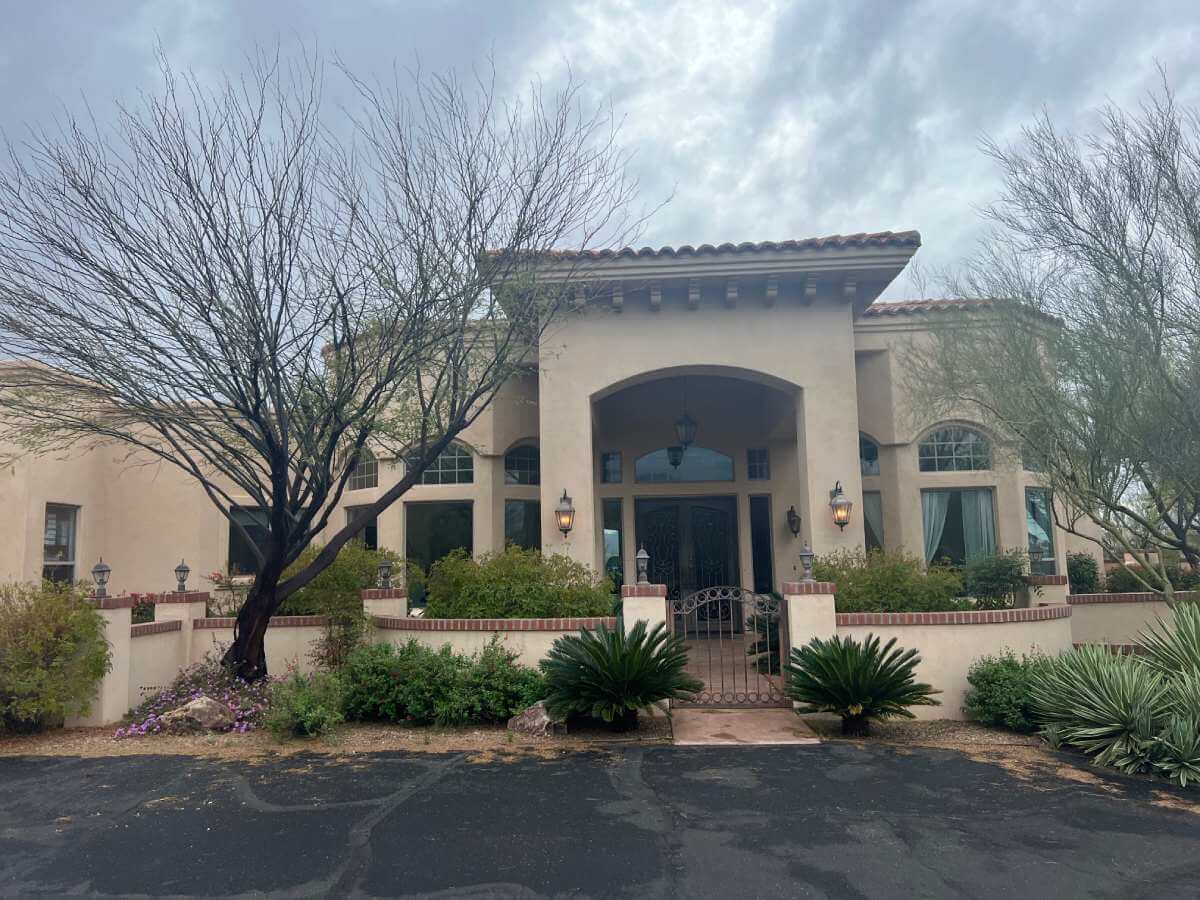







Stucco, an age-old exterior finish, has stood the test of time in terms of durability, versatility, and aesthetics, and with advancements in stucco materials and techniques, there’s a wide variety of modern stucco house colors from which to choose.
Choosing a stucco color can either make or break the look of a house. In this guide, we’ll explore the trends and timeless shades of modern stucco house color options and discuss specific paint picks, how to test colors on stucco, and what works best in the Arizona desert climate.
Sunset Coatings Stucco & Paint has over 25 years of experience in stucco installation, stucco repair, stucco restoration, and stucco painting. Whatever your home exterior needs, we’re here to help with Tucson expertise and a 2-year warranty on all work performed. Contact us today to schedule a free consultation.
The Evolution of Stucco Color
Historically, stucco was typically left in its natural color or whitewashed. The neutral, earthy tones were favored for their simplicity and elegance. However, with the evolution of modern stucco color pigments and the development of synthetic stucco products, homeowners now have a much wider range of stucco house colors to choose from.
Today, while neutral colors such as beige, taupe, and gray remain ever-popular, we’re seeing homeowners experimenting with bolder shades. From Mediterranean blue to sophisticated charcoal, rustic terracotta, and even muted sage greens, modern stucco colors truly span the color wheel.
The Top Trending Modern Stucco House Colors for 2026
Cool Grays
The allure of gray lies in its versatility. No longer just a “neutral,” gray stucco colors for houses have risen in popularity due to their ability to bridge both contemporary and classic design lines.
- Light Dove Grays: A modern stucco house color that exudes a tranquil elegance, light grays are ideal for homes aiming for a serene and inviting exterior. A popular choice such as Sherwin-Williams Dovetail (SW 7018) works beautifully in suburban settings, giving homes a fresh, updated look without being overpowering.
- Deeper Slate Tones: These grays carry a weight of sophistication. Their depth can anchor a home, making it stand out in a subtle, elegant way. Especially for larger homes or those with intricate architectural details, a deeper slate such as Sherwin-Williams Pewter Cast (SW 7673) can act as a canvas, highlighting the design elements without overshadowing them.
Earthy Browns
Brown, a color deeply rooted in nature, offers a comforting and grounded aesthetic. It echoes the earth’s raw beauty, making it a perennial favorite modern stucco house color and an especially natural fit in desert climates such as Tucson.
- Light Sandy Shades: These can be likened to a beach’s soft sands. Colors such as Sherwin-Williams Accessible Beige (SW 7036) or Dunn-Edwards Tundra (DE6219) are perfect for homes in sunny climates, reflecting light gracefully and providing a relaxed ambiance. In Arizona, sandy tones also offer a high light reflectance value (LRV), which helps keep wall temperatures down under intense sun.
- Rich Chocolate Hues: As indulgent as they sound, these deep browns can give a stately appeal to homes. Particularly in areas with lush greenery, a chocolate-brown facade can create a striking contrast with the surrounding landscape.
Mediterranean Blues
Inspired by the pristine waters and sky of the Mediterranean region, blue stucco colors on houses bring a slice of vacation right to your doorstep.
- Turquoise: A color that is almost teal, turquoise can transport you to the Grecian coasts with every glance. It’s vibrant without being garish and works wonders for homes that could use a lively splash of color.
- Cerulean: This deep blue, reminiscent of Spanish coastal towns, is rich and immersive. As modern stucco house colors, hues of cerulean offer depth and drama, making homes feel both luxurious and cozy.
Warm Terracottas
Rooted in history and tradition, terracotta shades have an undeniable old-world charm.
These colors are a nod to the reddish-brown clay used in classic pottery and tiles. They emanate warmth, making homes feel welcoming and rooted. Benjamin Moore Terra Cotta Tile (2090-30) or Sherwin-Williams Cavern Clay (SW 7701) are standout choices in this family.
Perfect for regions with warm climates, terracotta shades also complement homes with stone or wooden details. Whether it’s a modern city home looking for a touch of rusticity or a countryside residence, terracotta is a modern stucco house color that bridges the gap between the past and present seamlessly.
Muted Greens
One of the fastest-growing trends in modern stucco house colors is the shift toward nature-inspired greens. From sage to olive, these earthy tones bring a calming, organic feel to any exterior.
- Sage Green: A soft, muted green such as Benjamin Moore Saybrook Sage (HC-114) or Sherwin-Williams Svelte Sage (SW 6164) creates a cozy, cottage-inspired look. It’s versatile enough to suit Colonial, Craftsman, and contemporary homes alike, and it pairs beautifully with natural wood accents and stone.
- Olive Green: For something bolder, olive green offers a rich, earthy statement. It radiates calm across the entire landscape and stands out as one of the most unique stucco house colors available.
Modern Whites
Clean, contemporary whites have become the defining modern stucco house color for flat-roofed and minimalist homes. The key is choosing a white with the right undertone so it doesn’t read sterile or washed-out on stucco.
- Sherwin-Williams Alabaster (SW 7008) offers a soft, warm white with creamy undertones and an LRV of 82, bright without being stark. It pairs beautifully with terracotta roofs, stone accents, and wooden details.
- Benjamin Moore Classic Gray (OC-23) leans slightly greige and works well as a body color when paired with charcoal or matte-black window frames for a high-contrast modern look.
While uniqueness in home design is still valued today, these trending house stucco colors offer both timelessness and trendiness.
Each stucco color captures a feeling, whether it’s the calm of cool grays, the grounding nature of earthy browns, the escapism of Mediterranean blues, the warmth of terracotta, or the organic freshness of muted greens. The key is to choose a color that resonates with the soul of your home and its surroundings.
Factors To Consider When Choosing Your Stucco House Color
Choosing an exterior modern stucco house color isn’t just a decision of personal preference. It requires a holistic approach, factoring in the architectural style, environment, climate, and practical aspects including longevity and maintenance.
With careful consideration, your home can not only look stunning but also stand the test of time. Here are a few important elements to keep in mind when contemplating stucco house color ideas:
Architectural Style
Every home tells a story through its architectural style. Whether it’s a Victorian-era house, a sleek contemporary residence, or a Mediterranean-inspired villa, the design provides cues for appropriate color selection.
- Modern Minimalist Homes: These structures often embrace simplicity and subtle elegance. Monochromatic tones, including shades of white, gray, and black, can accentuate the home’s clean lines and open spaces, giving it a polished, cohesive appearance. Warm whites such as Sherwin-Williams Alabaster or Behr Polar Bear work especially well.
- Spanish Colonial Revival: This style, reminiscent of old-world Europe, thrives on warm, sun-baked colors. Think earthy terracottas, sunlit yellows, and rich browns. These colors not only honor the historical context but also complement the typical red-tiled roofs and ornate details. Benjamin Moore Navajo White (OC-95) is a classic body color for this style.
Surrounding Landscape
Your home doesn’t exist in isolation; it’s part of a larger canvas. The colors of the surrounding landscape play a critical role in influencing color choices.
- Lush Greenery: Homes surrounded by forests, gardens, or lawns might benefit from contrasting shades such as soft whites or cool blues. These colors stand out against the green, making the house a focal point.
- Arid Landscapes: For homes in desert regions like Tucson, earth tones such as beiges, browns, warm taupes, and muted greens blend seamlessly with the natural environment, mirroring the surrounding Sonoran landscape and creating a harmonious look.
Local Climate
It’s not just about aesthetics; it’s also about functionality. Modern stucco house colors can impact the energy efficiency of your home.
- Sunny Climates: In areas that receive strong sunlight, lighter stucco colors with a high LRV (light reflectance value) can help. They reflect sunlight, preventing excessive heat absorption and helping to maintain a cooler interior. This can be especially beneficial in reducing cooling costs. For homes in the desert Southwest, including Tucson, where summer temperatures regularly exceed 100 degrees Fahrenheit, choosing a lighter body color is one of the simplest ways to improve comfort and energy efficiency.
- Colder, Cloudier Regions: Here, darker shades might be more suitable. They absorb heat, which can be a boon in colder temperatures, ensuring the house retains warmth and feels cozier.
Longevity
Stucco is a long-lasting exterior finish. With that durability comes the responsibility of choosing a color that won’t just be a fleeting trend.
Instead of simply hopping onto the latest color bandwagon, think about the future. Will you still love that bright teal or neon orange five or 10 years down the line? Opt for classic shades or ones you have a deep personal affinity for to ensure your satisfaction in the long run.
Maintenance
The color you choose determines how often you need to clean or touch up your stucco.
- Darker Colors: These modern stucco house colors might be alluring and dramatic, but they also tend to show dust, wear, and minor imperfections more prominently. In high-UV environments such as Arizona, darker shades also fade faster, which means more frequent repainting.
- Lighter Shades: These stucco color options can be forgiving, masking minor blemishes and dirt. Synthetic stucco is known for easier maintenance and superior color retention compared to its traditional counterpart. So, if you’re leaning toward a vibrant or unique shade, synthetic might be the way to go.
HOA and Local Regulations
In many communities, particularly in areas such as Tucson’s historic districts, HOA rules or local ordinances may restrict your exterior color palette to a specific range of earth tones. Always check with your HOA or local planning office before committing to a color to avoid costly surprises.
How Stucco Texture Affects Color
One factor many homeowners overlook is how stucco texture changes the way a color looks. Stucco is not a smooth, flat surface; its porous, textured finish reflects and scatters light differently than wood siding or fiber cement.
- A heavy dash or rough-textured stucco finish casts micro-shadows across the surface, which can make any color appear one to two shades darker or more muted than it looks on a flat paint swatch.
- A smooth, sand-finish stucco reads closer to the swatch but often pulls slightly warmer in direct sunlight.
- The same paint code can look noticeably different on two stucco homes with different textures. That’s why it’s critical to test your color on the actual stucco wall rather than relying solely on paint chips or digital previews.
Understanding this relationship between texture and color perception can save you from a costly repaint and help you land on the perfect shade the first time.
The Best Paint Types for Stucco Exteriors
Choosing the right modern stucco house color is only half the equation. The type of paint you use matters just as much. Stucco is a porous, masonry-based surface that needs to release moisture, so any coating applied to it must be breathable (vapor-permeable). Here are the three main options:
- 100% Acrylic Latex: The best choice for most homeowners with sound stucco. Acrylic paint is breathable, flexible, offers a wide color range, and is the easiest to apply. It holds up well against UV exposure and is the most commonly recommended option for exterior stucco.
- Elastomeric Coatings: Ideal if your stucco has recurring hairline cracks or you live in a high-humidity area. Elastomeric coatings are thick and flexible, capable of bridging small cracks. However, they must be applied correctly on a dry, sound substrate. If they’re applied over damp or failing stucco, they can trap moisture and cause peeling or blistering.
- Mineral Silicate Paint: Best suited for historic lime-based stucco. Mineral paints bond chemically with the stucco surface, are extremely breathable, and offer exceptional color durability, but they have a more limited color palette.
One important note: New or freshly patched stucco needs to cure fully (typically 30 to 60 days) and should receive a masonry primer before topcoating. Skipping this step can cause uneven color absorption and a blotchy finish.
How To Test Stucco Colors Before Committing
Committing to 25+ gallons of paint based on a small swatch is one of the most common stucco painting mistakes. Stucco’s texture, your home’s sun exposure, and fixed elements such as the roof all affect how a color reads in person. Follow this process to choose with confidence:
- Start from your fixed elements. Look at your roof color, stone or masonry accents, pavers, and landscaping. These won’t change, so your stucco color should complement them.
- Narrow your choices. Select three to five colors that work with your fixed elements and architectural style.
- Sample on the actual wall. Brush a 2x2 ft. test patch on both a sunny and a shaded elevation of your home. Stucco reads differently on each side.
- Observe for 48 hours. Check the samples at dawn, midday, and dusk. Earth tones especially shift with changing light throughout the day.
- Budget for stucco’s porosity. Stucco absorbs more paint than smooth surfaces. Plan for approximately 250 to 300 sq. ft. of coverage per gallon on rough finishes, versus 350 to 400 sq. ft. on smooth stucco.
Taking the time to test properly can save you thousands of dollars in repaint costs and ensure you’re genuinely happy with the final result.
Choosing the Right Stucco Color for Your Home
Choosing the right stucco color for your home is a blend of personal taste, architectural consideration, and environmental factors. While the trends might shift from year to year, the timeless appeal of certain colors will always remain.
Whether you prefer a timeless look or unique, colorful stucco houses, modern stucco promises a beautiful, durable, and energy-efficient exterior for your home.
Stucco House Exteriors: Trim and Garage Door Colors
Selecting the perfect colors for your garage door and exterior trim to complement your stucco exterior can elevate your home’s aesthetic appeal significantly. While stucco offers a textured and unique facade, harmonizing it with the right trim and door shades brings cohesion and depth.
Neutral stucco colors can be accentuated with contrasting trim colors for a bold statement, or you can opt for analogous shades to create a more subtle and harmonious look. The garage door, being a prominent feature, should not be neglected.
Choosing a color that ties in with your stucco and trim can result in a balanced and polished exterior, reflecting thoughtfulness in design.
Here are three examples of stucco garage door and trim matching color schemes:
Earthy Tones
- Stucco Color: Warm beige or sandy taupe (e.g., SW Accessible Beige SW 7036)
- Trim Color: Deep chocolate brown or terracotta
- Garage Door Color: A muted olive or sage green
This combination reflects natural elements and gives the house a cozy, grounded appearance. It’s reminiscent of desert landscapes and pairs well with stone or wooden accents.
Mediterranean Blues
- Stucco Color: Soft white or pale gray
- Trim Color: Vibrant cobalt or Mediterranean blue
- Garage Door Color: A lighter shade of the trim, like sky blue or azure
This pairing evokes the charm of coastal Mediterranean homes, creating a refreshing and elegant look.
Modern Monochrome
- Stucco Color: Sleek slate gray or charcoal
- Trim Color: A slightly lighter gray or metallic silver
- Garage Door Color: Deep black or a matching slate gray
This color scheme exudes modern sophistication. The monochromatic palette is versatile and can be enhanced with colorful landscaping or kept minimalist for a chic appearance.
Sunset Coatings: Expert Assistance for Your Stucco Needs
At Sunset Coatings Stucco & Paint, we’re committed to providing the best stucco solutions for your home.
Whether you need a new stucco installation, stucco repair, stucco restoration, or a fresh paint job for your stucco home, we’ll get the job done right the first time. Request your free estimate today to get started.
Frequently Asked Questions About Modern Stucco House Color Options
What is the difference between traditional and synthetic stucco?
Traditional stucco, also known as cement stucco, is made from a blend of cement, sand, lime, and water, forming a hard, durable finish. It’s porous and allows the house to “breathe,” making it especially popular in humid climates. Synthetic stucco, often referred to as EIFS, is a multi-layered system that includes foam insulation, a water-resistant barrier, a base coat, and a finish coat made of acrylic polymers. EIFS offers enhanced energy efficiency and is more flexible, which can reduce the likelihood of cracking. However, it’s essential to ensure proper installation to prevent moisture-related issues.
How often should I repaint or refinish my stucco exterior?
The longevity of the stucco color largely depends on the quality of the stucco, the paint or finish used, and the local climate conditions. Typically, a well-applied stucco finish can last anywhere from 5 to 10 years before showing signs of wear or fading. However, synthetic stucco with an acrylic finish tends to retain color and structural integrity longer than traditional stucco. In high-UV environments like Tucson, scheduling regular inspections and touch-ups can extend the life of your stucco color considerably.
How does stucco contribute to energy efficiency?
Stucco acts as an excellent insulator, helping regulate indoor temperatures by reducing the transfer of heat. This is especially true for synthetic stucco (EIFS) systems, which include a layer of foam insulation, providing a thermal barrier for the home. This insulation property can help homeowners save on heating and cooling bills, making stucco both an aesthetically pleasing and practical choice for home exteriors.
What is the most popular color for a stucco house?
The most popular color for a stucco house is often a neutral shade, such as beige, taupe, or warm greige. Colors such as Sherwin-Williams Accessible Beige (SW 7036) and Benjamin Moore Navajo White (OC-95) consistently rank among the top-selling stucco colors due to their timeless appeal and versatility across different architectural styles.
What is the best color for stucco?
The best color for stucco depends on your home’s style, location, and personal preference, but neutrals like gray, warm sand, and creamy whites are often recommended for their timeless appeal. In the Arizona desert, warmer earth tones with a high LRV (light reflectance value) are a particularly smart choice because they reflect sunlight and keep walls cooler.
How do you make a stucco house look more modern?
To make a stucco house look more modern, consider updating to a clean, warm white body paired with contrasting dark trim, such as charcoal or matte-black window frames and a natural wood front door. Additionally, integrating modern landscaping and contemporary hardware can enhance the overall appearance.
Should a stucco house be painted?
Painting a stucco house can protect and refresh its facade. Using the right type of paint, such as a 100% acrylic latex or elastomeric coating, ensures longevity and enhances the home’s curb appeal. Be sure to let new stucco cure fully and apply a masonry primer before painting.
Are there any special maintenance requirements for colored stucco?
While stucco is known for its durability, colored stucco, especially in darker shades, might occasionally show signs of wear, dirt, or imperfections. Regular cleaning using a gentle stream of water from a garden hose can help maintain the appearance. It’s essential to inspect for cracks or signs of water damage periodically, addressing issues promptly to avoid more extensive damage. Synthetic stucco finishes often have better color retention and resist dirt and stains more effectively than traditional stucco, making maintenance somewhat easier.
What is LRV, and why does it matter for stucco?
LRV stands for light reflectance value, and it measures how much light a paint color reflects on a scale from 0 (pure black) to 100 (pure white). For stucco homes, especially in sunny climates like Arizona, a higher LRV means the color reflects more sunlight, which helps keep wall temperatures down and reduces cooling costs. When choosing a stucco body color, aim for an LRV of 50 or above for the best balance of aesthetics and energy efficiency.
What are the best stucco colors for Arizona homes?
The best stucco colors for Arizona homes are warm, sun-friendly earth tones that complement the desert landscape: sandy beiges, warm taupes, muted terracotta, and creamy off-whites. Colors with a high LRV help reflect the intense sun and reduce heat absorption. Popular picks include Sherwin-Williams Accessible Beige (SW 7036), Dunn-Edwards Tundra (DE6219), and Sherwin-Williams Latte (SW 6108).