
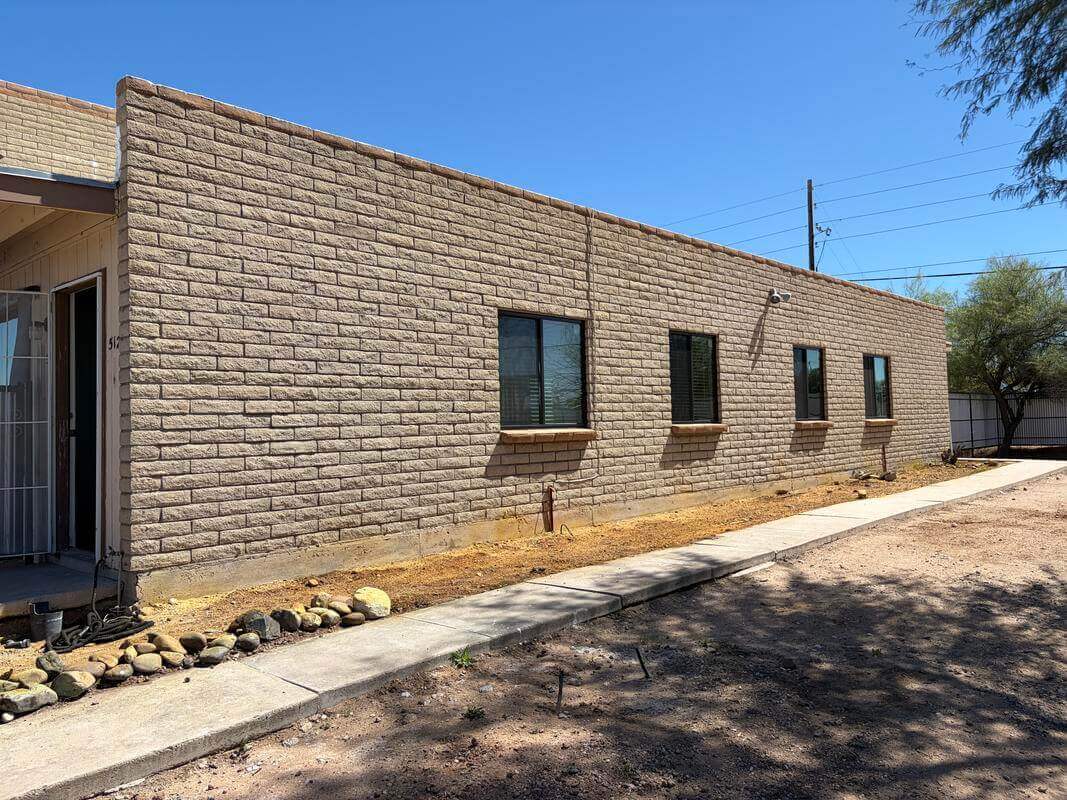







Stucco parapet repair is of utmost importance if your building has rooftop parapets that are chipped, cracked, or deteriorating.
When it comes to home maintenance in Tucson, Arizona, one aspect that homeowners often overlook is the health of their stucco roof parapets.
Nestled amidst the stunning backdrop of the Sonoran Desert, Tucson homes are frequently exposed to the unique challenges of this arid environment, from blistering sun to monsoon rains.
Stucco roof parapets, while aesthetically appealing and historically significant, are particularly vulnerable to these environmental challenges.
Because parapets are exposed on all sides, unlike a standard exterior wall, they endure more direct sunlight, greater temperature swings, and more wind-driven rain than any other stucco surface on your home.
Ensuring their maintenance is critical for both the longevity of your home and the safety of its occupants.
If your stucco roof parapets are crumbling, cracked, or otherwise deteriorating, it’s important to schedule stucco repair as soon as possible.
Be sure to use a professional stucco contractor to ensure the work is done properly.
Weather Exposure and the Tucson Climate
Tucson boasts over 350 days of sunshine annually. While this makes for a great living experience, the relentless sun has a potent impact on stucco surfaces.
Ultraviolet (UV) rays can cause stucco to fade, dry out, and become brittle over time. This is especially true for parapets, which receive direct sunlight on both their interior and exterior faces throughout the day.
Furthermore, the summer months in Tucson often herald the monsoon season, marked by torrential downpours, gusty winds, and even hail.
These rapid weather transitions from extreme heat to sudden cooling during a rainstorm can cause stucco to expand and contract, a cycle known as thermal stress.
Over time, this repeated thermal expansion and contraction leads to cracks, delamination of the finish coat, and possible structural damage. Cap flashing at the top of the parapet can also separate from the stucco during these cycles, creating an entry point for water.
Stucco Roof Parapets: More Than Just Decoration
Parapets, the low protective walls or barriers at the edge of a roof, have been an architectural feature for centuries. In Tucson, stucco parapets not only add an aesthetic touch, channeling the region’s rich Spanish Colonial influences, but they also serve practical purposes.
They provide an added layer of fire protection, prevent roof debris accumulation, and offer a barrier against wind.
Parapets also conceal rooftop mechanical equipment and help direct rainwater toward roof drains rather than letting it cascade over the edge. When compromised, these protective features are jeopardized, putting the whole house at risk.
Common Signs of Parapet Damage
Not all parapet damage looks the same, and recognizing the severity of the issue helps determine the right repair approach. Common signs include:
- Hairline cracks: Thin surface cracks that haven’t yet penetrated the base coat. These are the easiest and least expensive to address.
- Intermediate cracks and spalling: Wider cracks where the stucco finish coat has begun to peel, flake, or separate (delaminate) from the base layer.
- Large holes and exposed lath: Severe deterioration where the metal lath or wire mesh beneath the stucco is visible. This usually signals underlying water damage.
- Cap flashing separation: The metal flashing along the top of the parapet has pulled away, allowing water to penetrate behind the stucco.
- Efflorescence or staining: White mineral deposits or dark stains on the stucco surface, indicating moisture is moving through the wall assembly.
- Soft or crumbling stucco: When you press on the parapet and the material gives way, the substrate has likely been compromised by water damage.
If you notice any of these signs, it’s wise to schedule a professional stucco inspection before the damage spreads further.
Water Damage: A Silent Destroyer
One of the major threats posed by damaged parapets is water intrusion. Cracks or breaks in the stucco can allow water to seep into the underlying structures. Given Tucson’s occasional heavy rains, a small crack can soon escalate into significant water damage.
Water typically enters through cracks on the parapet surface or where the stucco meets the roofing membrane at the base. Once inside, moisture becomes trapped between layers, accelerating deterioration from within.
Water infiltration can lead to mold growth, wood rot, and damage to insulation. If left unchecked, the costs of repair can be exponentially higher than simple parapet maintenance.
Proper stucco waterproofing during any parapet repair, including the use of moisture barriers and sealed flashing joints, is essential to prevent recurring water intrusion.
How Stucco Parapet Repair Works
Understanding the repair process helps homeowners know what to expect and why professional workmanship matters. While the exact approach depends on the severity of the damage, here’s a general overview of how stucco parapet repairs are completed:
Step 1: Inspection and Assessment
A thorough inspection of all parapet walls identifies every crack, hole, and area of delamination. The condition of the cap flashing and the seam where the parapet meets the roofing membrane are also evaluated.
Step 2: Removal of Damaged Material
Any loose, crumbling, or deteriorated stucco is removed down to a stable substrate. For minor repairs, this may mean cleaning out a crack. For more extensive damage, it could involve full stucco restoration, removing the stucco finish down to the metal lath.
Step 3: Substrate Preparation
The exposed area is cleaned and prepped. If the metal lath is corroded or the moisture barrier is compromised, those layers are replaced before any new stucco is applied.
Step 4: Patching and Base Coat Application
A Portland cement-based stucco mix or a high-strength polymer base coat is applied over the prepared substrate. Alkali-resistant fiberglass mesh is embedded into the base coat to add flexibility and crack resistance; this is especially important in Tucson’s climate where thermal cycling is constant.
Step 5: Finish Coat
Once the base coat cures, an acrylic finish coat is applied to match the existing texture and color of your stucco. This topcoat also provides UV resistance and additional waterproofing.
Step 6: Flashing and Sealing
Cap flashing is inspected, re-secured, or replaced to ensure a minimum 2-inch overlap with a proper drip edge. The seam where the stucco parapet meets the roofing membrane is resealed with a flexible, weather-resistant sealant designed to bond dissimilar materials.
Applying an elastomeric coating or waterproof primer over the finished repair adds a final layer of protection against Tucson’s UV exposure and monsoon rains.
Resurfacing vs. Full Parapet Rebuild
Not every damaged parapet requires a complete tear-off. The right approach depends on the condition of the existing structure:
Resurfacing (Minor to Moderate Damage)
If the underlying substrate, metal lath, and moisture barrier are still intact, resurfacing is often sufficient.
This involves applying a new polymer base coat with embedded fiberglass mesh, followed by a fresh acrylic finish coat. Resurfacing restores the parapet’s weather resistance without the cost of a full rebuild.
Full Rebuild (Severe Damage)
When the stucco has deteriorated to the point of exposed, corroded lath or compromised framing, a complete rebuild is the better long-term solution. This process involves:
- Breaking out all existing stucco and damaged substrate.
- Installing a new moisture barrier.
- Fastening new metal lath.
- Replacing or upgrading cap flashing with a proper drip edge.
- Applying a Portland cement or polymer base coat with fiberglass mesh.
- Finishing with an acrylic color coat matched to the existing exterior.
A full rebuild, while more involved, gives your parapets a fresh start and can add decades of service life.
Energy Efficiency and Cost Savings
A well-maintained stucco roof parapet directly impacts energy efficiency. Cracks or gaps can compromise the insulation capabilities of your home, leading to more significant heat exchange.
In a city known for its high temperatures, this means your cooling system will have to work overtime, leading to higher energy bills.
Parapets that have been properly repaired with a polymer base coat and sealed flashing also reduce air infiltration at the roof line, keeping conditioned air where it belongs. Investing in timely repairs can lead to considerable long-term savings.
Stucco Parapet Repair Cost
One of the most common questions homeowners ask is how much parapet repair will cost. While pricing varies depending on the extent of the damage and the size of the parapet walls, here are some general ranges:
- Minor repairs (hairline cracks, small holes, re-caulking flashing): Typically $800 to $1,500
- Moderate repairs (larger cracks, partial delamination, localized base coat replacement): Typically $1,500 to $3,000
- Full parapet rebuild (exposed lath, compromised substrate, corroded flashing): Typically $3,000 to $10,000+, depending on the size of your roof and number of parapet walls
Early intervention is key. Addressing hairline cracks and flashing issues when they first appear prevents them from escalating into full-rebuild territory.
We recommend inspecting your parapets at least once a year, ideally before monsoon season, and scheduling maintenance every one to two years.
For a free, no-obligation estimate on your Tucson stucco parapet repair, give us a call.
Preserving Home Value
The exterior appearance of your home greatly affects its market value. A deteriorated stucco parapet not only detracts from your home’s aesthetic appeal but can also raise red flags for potential buyers concerned about underlying structural issues.
Regular maintenance ensures that your home retains its charm and market value.
If you own a larger property or commercial building with stucco parapets, consider having the property site inspected by drone imaging to check for wear-and-tear on your property.
Safety Concerns
Last but certainly not least, damaged parapets can pose a direct safety risk. Loose stucco or destabilized sections of the parapet can fall, potentially causing injury to inhabitants or visitors.
Severely deteriorated parapets may also fail to meet current building codes, which could create liability issues.
If you have solar panels on your roof, it’s worth having a professional solar company remove them prior to repair. If you’re in Tucson, we recommend Saguaro Solar, a Tucson-based solar company, although you do have many options.
Ensuring that your stucco parapet is in good repair protects your home’s occupants and guests.
Protect Your Investment With Stucco Parapet Repair
In the picturesque setting of Tucson, Arizona, the unique blend of cultural heritage and natural beauty is evident in the city’s architecture.
Stucco roof parapets, echoing the region’s history, are a testament to this blend. However, like any other structural element, they require regular maintenance and timely repairs.
Ignoring the health of your stucco roof parapets can lead to escalating repair costs, decreased home value, compromised energy efficiency, and even safety hazards.
With the unique challenges posed by the Tucson climate, including intense UV exposure, thermal cycling, and monsoon-driven water intrusion, proactive maintenance is even more critical.
In the end, it’s about preserving the integrity, beauty, and safety of your home. Recognize the importance of your stucco roof parapets, and invest in their upkeep; it’s a decision that pays off in numerous ways.
Frequently Asked Questions About Stucco Parapet Repair
How do you repair damaged exterior stucco?
Damaged exterior stucco can be fixed by first removing any loose or deteriorated material. Clean the affected area, ensuring it’s free of dust and debris. Once prepped, you can apply a Portland cement stucco patch or a polymer base coat with fiberglass mesh for added crack resistance. For damage near a rooftop, a stucco parapet repair might be necessary, which would require additional attention to flashing, moisture barriers, and the seam where the parapet meets the roofing membrane to ensure proper drainage and prevent future issues.
Can I repair stucco myself?
Yes, with the right tools and materials, you can repair minor stucco cracks yourself using a high-quality caulk or elastomeric sealant. However, if the damage extends to structural elements such as a parapet, especially if the metal lath is exposed or the cap flashing has separated, it’s recommended to consult a professional for a thorough parapet repair or rebuild.
How are stucco cracks repaired?
Stucco cracks can be repaired by cleaning out the crack and applying a high-quality caulk or sealant, followed by a stucco patch. Larger cracks may require cutting back to the base coat and applying a new polymer base coat with embedded fiberglass mesh. If the cracks are on a parapet, ensure you address any potential flashing issues or moisture intrusion that could have caused the cracks in the first place.
When should I worry about stucco cracks?
While minor stucco cracks can be a normal result of settlement, you should worry if they’re wider than 1/16 inch, recurrent, or if there’s evidence of moisture intrusion such as staining, efflorescence, or soft spots. Cracks around structures such as parapets might indicate underlying flashing failure or delamination and should be assessed by a professional promptly.
What causes stucco parapet cracks?
Stucco parapet cracks are most commonly caused by thermal expansion and contraction, i.e., the repeated heating and cooling cycle that’s especially intense in Tucson’s climate. Other common causes include cap flashing that has separated from the stucco surface, settling of the building structure, water infiltration that freeze-thaws in rare cold snaps, and aging of the original stucco material. Parapets are more vulnerable than standard walls because they are exposed to weather on multiple sides.
How much does stucco parapet repair cost?
Stucco parapet repair costs depend on the extent of the damage. Minor repairs such as crack sealing and small patches typically range from $800 to $1,500. More significant work involving base coat replacement and flashing repair usually runs $1,500 to $3,000. A full parapet rebuild, including new metal lath, moisture barrier, base coat, mesh, and finish coat, can range from $3,000 to $10,000 or more depending on the size and number of parapet walls on your roof.
Do stucco parapets need waterproofing?
Yes. Because parapets are exposed to weather on all sides and sit at the junction of the roof and wall, they are highly susceptible to water intrusion. A proper parapet repair should include a moisture barrier behind the stucco, sealed cap flashing with a drip edge, and either an elastomeric coating or waterproof primer on the finished surface. These layers work together to prevent water from penetrating the wall assembly.
How often should I inspect my stucco parapets?
We recommend inspecting your stucco parapets at least once a year, ideally in the spring before Tucson’s monsoon season begins in June. Look for new cracks, flashing separation, staining, or areas where the stucco feels soft. Professional maintenance every one to two years, including crack sealing and flashing inspection, can prevent minor issues from becoming costly repairs.