
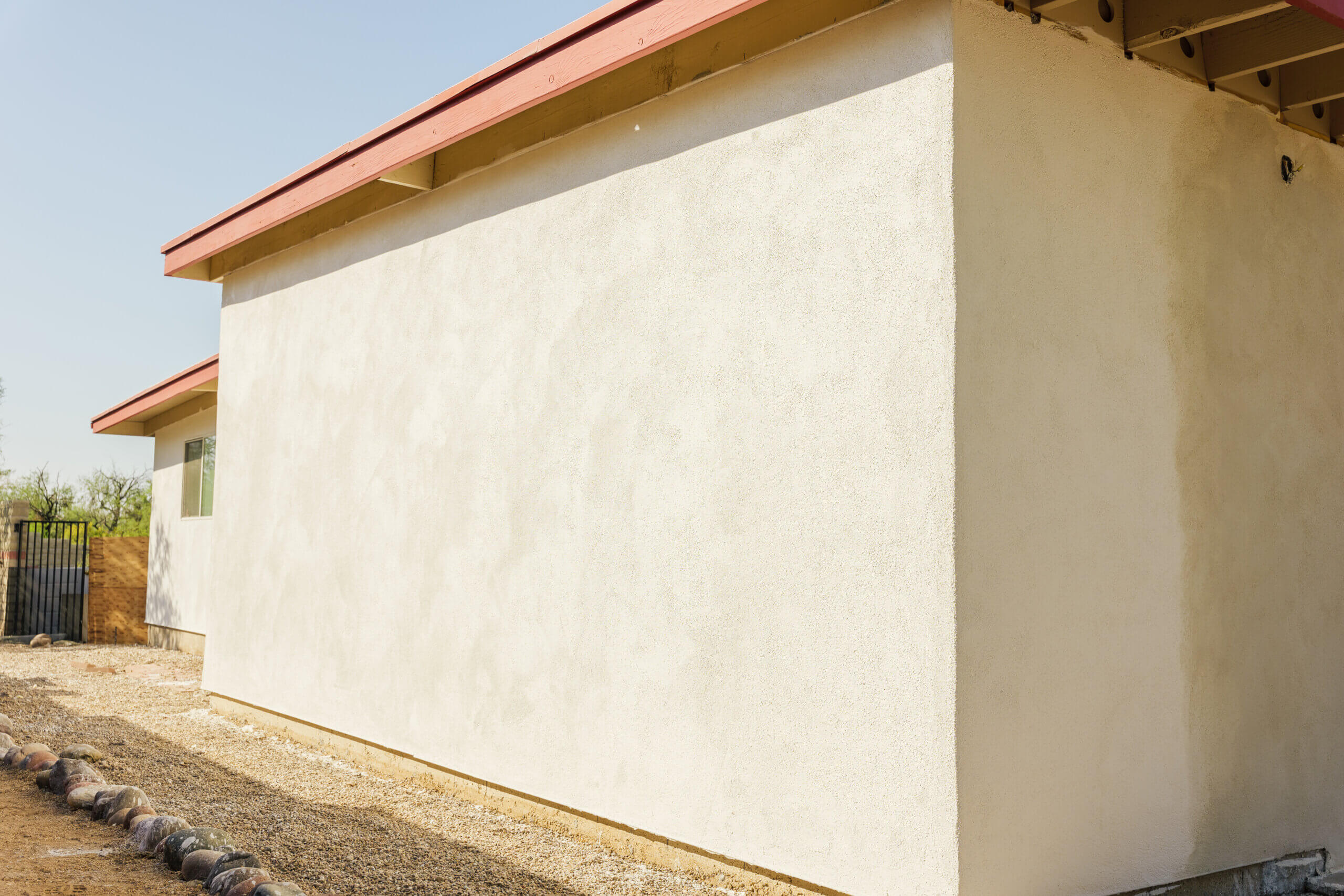







Stucco is a popular exterior finish for homes and buildings, known for its durability and low maintenance. However, like any other building material, stucco is not immune to damage, and water is its biggest threat.
Dealing with stucco water damage is essential to maintain the structural integrity and appearance of your home.
As a porous material, stucco can absorb moisture during rainstorms, monsoon downpours, and even through morning dew. When that water seeps in and gets trapped, it leads to cracks, discoloration, mold growth, and in severe cases, rot behind your walls.
As a leading Tucson stucco repair and installation company, the team here at Sunset Coatings Stucco & Paint has seen more than our fair share of water-damaged stucco and the problems it can cause, especially during monsoon season.
In this guide, we cover:
- How to spot stucco water damage early.
- Moisture detection methods homeowners can use.
- Treatment options for water-damaged stucco.
- What happens if stucco water damage is ignored.
- Prevention tips to protect your home long-term.
Understanding Stucco Water Damage
Before diving into treatment and prevention, it helps to understand what causes stucco water damage in the first place.
Stucco is a cement-based material, which means it’s naturally porous. During rainstorms, it absorbs small amounts of water. Under normal conditions, that moisture evaporates as the stucco dries.
Problems start when water gets trapped, either because of cracks, poor drainage, failed sealant, or improper installation.
Common causes of stucco water damage include:
- Heavy or prolonged rain, especially during Tucson’s monsoon season.
- Hairline cracks and gaps around windows, doors, and penetrations.
- Missing or deteriorated caulking and sealant.
- Improper installation, including missing moisture barriers, flashing, or weep screeds.
- Clogged gutters and poor grading that directs water toward exterior walls.
- Hidden plumbing leaks behind walls.
In Tucson, the constant cycle of extreme heat during the day and cooler nighttime temperatures causes stucco to expand and contract repeatedly, which gradually opens up hairline cracks. Monsoon season then drives heavy rainfall directly into those cracks, accelerating the damage.
How To Spot Stucco Water Damage: Warning Signs
Catching stucco water damage early is the single most important thing a homeowner can do. These are the warning signs to watch for:
- Staining and Discoloration: Dark streaks, water marks, or brownish stains on the stucco surface indicate moisture has reached the material. Look closely where the stucco meets windows, flashing, and rooflines for tear-shaped stains.
- Cracks Around Windows and Doors: Cracks that radiate from the corners of windows, doors, or light fixtures often signal that water is getting behind the wall.
- Bubbling or Blistering: When moisture gets trapped under the stucco, the surface can bubble, blister, or peel away from the substrate.
- Efflorescence: White, chalky mineral deposits on the stucco surface. These are caused by water carrying salts through the material as it evaporates, and they’re a clear sign of moisture movement.
- Soft or Spongy Spots: If pressing on the stucco reveals soft areas, the lath, building paper, or sheathing behind it is likely compromised by moisture or rot.
- Mold or Mildew Growth: Visible mold on the exterior surface or a persistent musty smell near walls points to ongoing moisture problems that need immediate attention.
- Bulging or Missing Chunks: Sections of stucco that bulge outward or break away indicate advanced water damage underneath.
- Higher Energy Bills: Water damage compromises insulation behind stucco walls, which can lead to increased cooling costs, especially during Tucson’s extreme summer heat.
If you notice any of these signs, do not assume it’s just cosmetic. What looks like a surface crack may signal structural damage beneath the stucco.
How To Check for Moisture Behind Stucco
Sometimes water damage isn’t visible from the outside. Here are methods homeowners and professionals use to detect hidden moisture behind stucco:
- Visual Inspection: Walk around the exterior after a heavy rain and look for areas that stay wet significantly longer than the rest of the surface. Persistent damp spots or discoloration that never fully dries is a strong indicator of trapped moisture. See our stucco inspection guide for complete directions.
- Moisture Meter Testing: A pin-type or pinless moisture meter can measure moisture levels in the wall. Readings above 15-20% suggest water intrusion behind the stucco. Many home inspectors and stucco contractors use these during evaluations.
- Infrared Thermal Imaging: Thermal cameras detect temperature differences in the wall that indicate wet areas. Cooler spots behind stucco often mean moisture is present. This is a noninvasive way to find hidden water damage without removing any material.
- Invasive Probe Testing: For conclusive results, a professional can drill a small hole through the stucco to insert a probe or borescope and directly measure moisture levels and visually inspect the wall cavity. This is the most accurate method and is standard in professional stucco leak detection.
If you suspect water intrusion but cannot confirm it visually, scheduling a professional moisture assessment is worth the investment. Finding the problem early saves thousands in repair costs.
Treatment Options for Stucco Water Damage
If you have identified water damage, addressing it quickly is critical. The longer moisture sits behind your walls, the worse it gets. Here are the main treatment options:
Repair Cracks and Holes
The first step in treating stucco water damage is to repair any visible cracks, holes, or gaps. Use a stucco patching compound for small hairline cracks. For cracks wider than 1/8 inch, use a flexible stucco repair caulk or elastomeric filler that can expand and contract with temperature changes.
Key steps:
- Clean the crack or hole with a wire brush to remove loose material.
- Dampen the area before applying the patch.
- Apply the patching compound in layers, allowing each to set.
- Match the surrounding texture using a sponge float, trowel, or other texturing tool.
Remove Mold and Mildew
If you see mold or mildew on your stucco, it needs to be removed before any repair work begins. A solution of one part bleach to three parts water works for surface mold. Scrub the affected area with a stiff brush, rinse thoroughly, and allow it to dry completely.
Important: Always wear protective gear, including gloves, safety glasses, and a respirator, when working with mold. If the affected area is larger than 10 square feet, consider hiring a professional mold remediation service.
Seal and Waterproof the Stucco
After repairs, applying a quality waterproofing sealant or elastomeric coating is essential to prevent future water intrusion.
Penetrating sealants (silane/siloxane based) absorb into the stucco and provide protection without changing the appearance, while elastomeric coatings create a flexible waterproof membrane on the surface.
Apply the sealant according to the manufacturer’s instructions, covering all areas including around windows, doors, and where the stucco meets the roofline or foundation.
Know When To Call a Professional
Not all stucco water damage is a DIY project. You should call a professional stucco contractor when:
- Damage covers a large area or multiple walls.
- You find soft spots suggesting rot behind the stucco.
- Mold growth is extensive or recurring.
- You cannot identify the water source.
- The stucco is bubbling, bulging, or falling off.
- Moisture meter readings are consistently high.
A qualified contractor will evaluate the full extent of the damage, check the condition of the lath, moisture barrier, and sheathing, and determine whether you need a localized repair or full stucco restoration.
What Happens if You Ignore Stucco Water Damage
Putting off stucco water damage repair is one of the most expensive mistakes a homeowner can make. Here’s what happens when the problem is left untreated:
- Structural Rot and Decay: Water that penetrates past the stucco reaches the underlying wood framing, sheathing, and lath. Over time, this causes rot and decay that weakens the building’s structure and creates serious safety risks.
- Mold Infestation: Dark, damp wall cavities are ideal conditions for mold growth. What starts as a small patch behind the stucco can spread through the wall and into your living space, affecting indoor air quality and potentially causing health problems.
- Escalating Repair Costs: A small crack that costs a few dollars to fix today can turn into a full stucco remediation project costing thousands if water damage is allowed to spread to the framing and insulation.
- Reduced Home Value: Visible stucco damage, moisture stains, and mold issues make a property harder to sell. Many home inspectors now check for stucco moisture problems, and failed inspection results can kill a sale.
- Insulation Damage: Wet insulation loses its ability to regulate temperature, leading to higher energy bills, especially in extreme climates such as Tucson where summer cooling costs are already significant.
The bottom line is that addressing stucco water damage as soon as it is identified saves you time, money, and stress.
Preventing Stucco Water Damage
Prevention is always more cost-effective than repair. Here are actionable tips to protect your stucco long-term:
- Inspect Regularly: Walk around your home, and inspect your stucco at least twice a year: once before monsoon season begins and once after it ends. Look for new cracks, discoloration, or areas where caulking has pulled away.
- Maintain Gutters and Drainage: Keep gutters clean, and make sure downspouts direct water at least 3 to 4 feet away from the foundation. Ensure the grading around your home slopes away from exterior walls so water does not pool against the stucco.
- Re-Caulk Around Openings: Caulking around windows, doors, light fixtures, and other exterior penetrations breaks down over time. Check it annually and re-caulk any areas that are cracked, gapped, or pulling away.
- Apply Waterproofing Protection: A quality penetrating sealer or elastomeric coating adds a layer of defense against moisture. Reapply as recommended by the manufacturer, typically every 5 to 10 years.
- Monitor Sprinkler Placement: Make sure sprinkler heads are not spraying directly against stucco walls. Repeated water exposure from sprinklers is a common but overlooked cause of stucco moisture damage.
- Watch for Plumbing Leaks: Interior plumbing leaks behind walls can saturate wall cavities from the inside. If you notice unexplained damp spots, increased water bills, or musty odors, have a plumber inspect for hidden leaks before assuming the issue is stucco-related.
- Address Small Repairs Immediately: A hairline crack costs almost nothing to patch. Left alone, it becomes a pathway for water and can lead to thousands of dollars in remediation. Fix small problems before they grow. See our guide about how to repair stucco for detailed guidance.
By following these tips, you can prevent stucco water damage and keep your home’s exterior in great condition for decades, even in Tucson’s demanding desert climate.
Dealing With Stucco Water Damage: The Bottom Line
Stucco water damage requires prompt action to prevent it from escalating into a structural nightmare. Here are the key takeaways:
- Learn the warning signs including staining, cracks, bubbling, efflorescence, soft spots, and mold.
- Use moisture detection methods to catch hidden problems early.
- Repair small issues immediately before they grow.
- Waterproof your stucco as a preventive measure.
- Call a professional when the damage is beyond basic patching.
If you need professional stucco water damage assistance in Tucson, Arizona, contact Sunset Coatings Stucco & Paint. Our experienced team will provide a free quote to repair and restore your stucco, ensuring it remains in excellent condition for years to come.
Frequently Asked Questions About Stucco Water Damage
Does homeowners insurance cover stucco water damage?
Coverage varies by policy. Most homeowners insurance covers stucco damage from sudden, unforeseen events such as storm damage or burst pipes. However, damage caused by gradual wear and tear, deferred maintenance, or long-term neglect is typically excluded. Review your policy or speak with your insurance agent about specific coverage for water damage to stucco.
Does stucco deteriorate from moisture damage?
Yes. Stucco is a cement-based material that can deteriorate significantly when exposed to persistent moisture. Over time, water intrusion weakens the bond between the stucco and the substrate, causes cracking, promotes efflorescence, and can lead to rot in the underlying framing. Regular maintenance and proper sealing are the best ways to prevent stucco from deteriorating.
How do you know if water is behind stucco?
Common indicators include persistent discoloration or damp spots that don’t dry, soft or spongy areas when you press on the wall, mold growth on the exterior or a musty smell inside, and cracks radiating from windows or doors. For a definitive answer, use a moisture meter or schedule a professional moisture inspection with infrared thermal imaging or probe testing.
How long does stucco last with proper maintenance?
Well-maintained stucco can last 50 to 80 years or more. The key factors are regular inspections, timely crack repairs, proper drainage, and periodic reapplication of waterproofing sealant. In harsh climates like Tucson, where UV exposure and monsoon rain take a toll, proactive maintenance extends stucco lifespan significantly.
Can I paint over water-damaged stucco?
Painting over water-damaged stucco without fixing the underlying problem is not recommended. The moisture will continue to deteriorate the stucco from behind, causing the paint to bubble, peel, or flake. Always repair the damage and address the water source first, and then allow the stucco to dry completely before applying primer and paint.
What is the difference between stucco repair and stucco remediation?
Stucco repair typically refers to patching localized damage, filling cracks, replacing small sections, and resealing. Stucco remediation is a more extensive process that involves removing large sections of stucco, addressing underlying issues such as rot, replacing moisture barriers and lath, and reapplying stucco from scratch. Remediation is necessary when water damage has reached the structural components behind the stucco.