
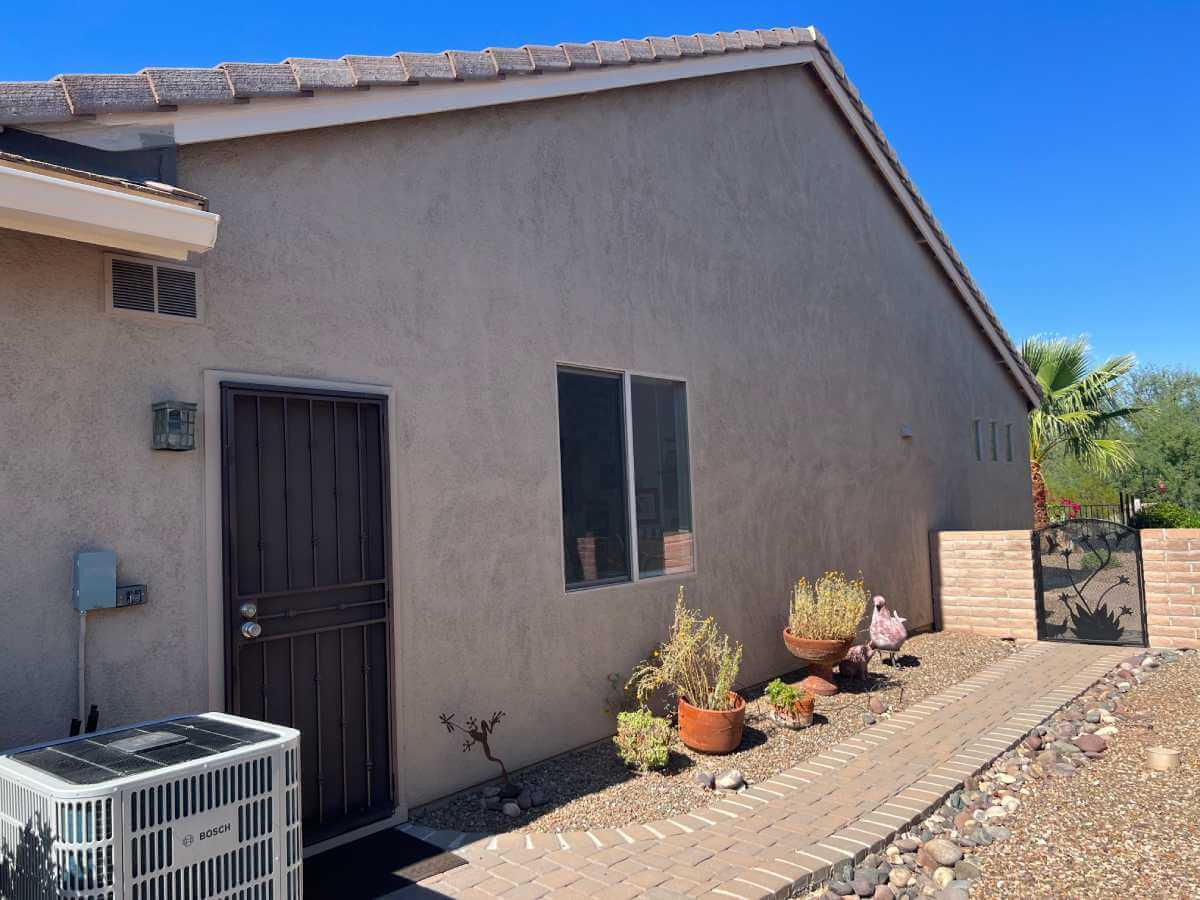







Looking for a durable and stylish exterior for your home? Residential stucco might be the perfect fit. Popular across Southern Arizona, stucco offers homeowners a resilient, low-maintenance exterior that can withstand the region’s hot, dry climate while providing versatile design options.
In this post, we’ll explore:
- What stucco is and the different types used in residential construction.
- How stucco is applied to home exteriors.
- The pros and cons of stucco as a home exterior material, including costs.
- Key maintenance tips for keeping your stucco in top shape.
- Why working with professional contractors is crucial for proper installation.
Sunset Coatings Stucco & Paint has over 15 years of experience in Tucson, providing expert stucco installation and repair for homeowners. By the end of this guide, you’ll know if stucco is the right choice for your home and how professional installation ensures long-lasting results.
What Is Stucco?
Stucco is a versatile and durable exterior material that has been used in residential homes for centuries. Originally derived from ancient building techniques, stucco was favored by civilizations such as the Romans and Greeks, who used lime-based plaster to coat their walls.
Over time, this material evolved, incorporating Portland cement and other additives to improve its strength and longevity.
Today, stucco is known for its ability to withstand harsh climates, making it particularly popular in regions such as Southern Arizona, where extreme heat and occasional rain storms are common.
In fact, stucco is the predominant exterior for both residential and commercial construction across Arizona, California, Nevada, New Mexico, and Florida.
Traditional stucco is made from a mixture of sand, Portland cement, lime, and water, which is applied to walls in layers to create a hard, durable surface. It’s been a staple in home construction due to its affordability, adaptability, and resistance to fire and moisture.
Synthetic stucco, known as EIFS (Exterior Insulation and Finish System), is a more modern version. Developed in Europe after World War II and introduced in the U.S. in the 1960s, EIFS quickly gained popularity for its energy efficiency.
Unlike traditional stucco, EIFS incorporates an insulating layer of expanded polystyrene foam, which helps homes retain heat in the winter and stay cool during the summer.
In modern construction, both traditional and synthetic stucco are widely used. Traditional stucco is prized for its thick, protective qualities and ability to resist damage, while EIFS provides superior insulation and flexibility.
Understanding the differences between these two types of stucco can help homeowners make informed decisions about which material is best for their home.
Types of Stucco for Residential Homes
Traditional Stucco
Traditional stucco, also referred to as hard-coat stucco, has been used for centuries in various architectural styles.
From Spanish missions to Mediterranean homes, traditional stucco is especially common in arid climates such as Southern Arizona due to its natural resistance to heat and its ability to maintain a home’s cool interior.
One of the primary advantages of traditional stucco is its durability. Applied in three layers (scratch coat, brown coat, and finish coat), it forms a thick, protective barrier over the home’s exterior that can last 50 to 80 years or more with proper maintenance. Some well-maintained stucco exteriors have been known to last 100 years or longer.
Traditional stucco weighs approximately 10 pounds per square foot, giving it a solid, substantial feel. It also offers homeowners flexibility in design, with the option to choose from various textures and finishes.
Common stucco finishes include smooth, dash, lace, sand, sponge, and cat face textures, each offering a distinct look that can complement different architectural styles.
However, traditional stucco does have limitations. While it’s generally durable, it can be prone to cracking, especially in areas with shifting soil, seismic activity, or significant temperature fluctuations.
In Tucson, daily thermal cycling puts constant stress on rigid cement stucco, which can lead to hairline or structural cracks over time. Homes built on foundations that settle or shift over time may see cracks appear in their stucco, which require prompt stucco repair.
Another common cosmetic issue is efflorescence, a white, powdery deposit caused by moisture pulling salts from within the cement to the surface.
Synthetic Stucco (EIFS)
EIFS, which stands for Exterior Insulation and Finish System, is a more recent development in stucco technology. Unlike traditional stucco, EIFS includes a foam insulation board, typically made of expanded polystyrene, as part of the system.
This insulating layer makes EIFS particularly appealing for homeowners looking to reduce their energy costs, as it helps to maintain interior temperatures more effectively.
The insulation performance of EIFS is one of its strongest selling points. EIFS delivers an R-value of approximately 3 to 5 per inch of insulation, compared to traditional stucco’s R-value of just 0.20.
For context, R-value measures a material’s ability to resist heat flow, so a higher number means better insulation. EIFS can reduce air infiltration by as much as 55% compared to standard construction methods, which can translate to significant savings on heating and cooling bills.
Another key advantage of EIFS is its flexibility. The material is more resistant to cracking than traditional stucco because it’s lighter (roughly 2 pounds per square foot, about 80% lighter than traditional stucco) and has some elasticity, allowing it to move with the structure of the home without cracking as easily.
However, EIFS has faced some criticism for its vulnerability to water damage if not installed properly. Early versions of EIFS lacked proper drainage systems, which led to moisture becoming trapped behind the stucco, causing mold and structural damage.
Modern EIFS systems have addressed these issues with the addition of water-resistant barriers and drainage channels to prevent moisture from getting trapped behind the wall.
Other Stucco Variations
Beyond traditional and synthetic stucco, homeowners may encounter a few other variations:
- Acrylic Stucco: A type of synthetic finish that uses acrylic resin for improved water resistance and flexibility. Acrylic stucco comes in a wide range of colors with integrated pigments, so it often doesn’t require separate painting. It’s the most expensive option, typically costing between $12 and $27 per square foot installed.
- One-Coat Stucco: A faster, lighter alternative that combines the scratch coat and brown coat into a single application. It costs less (around $5 to $7 per square foot) and requires less labor, though it’s slightly less durable than a full three-coat system.
- Lime Stucco: The original form of stucco, made without Portland cement. Lime stucco has higher fluidity, which makes it a better fit for older buildings with settling foundations. It’s commonly used in historic preservation and restoration projects.
While traditional stucco may be a better option for homeowners focused on durability and classic aesthetics, EIFS is ideal for those prioritizing energy efficiency and insulation.
The Stucco Installation Process
Installing stucco is a labor-intensive process that requires expertise and attention to detail to ensure the material performs well over time. The process varies between traditional stucco and EIFS, but both require a multi-layered approach to create a durable finish.
Traditional Stucco Installation
1. Surface Preparation
Before applying stucco, the exterior surface must be prepared. For wood-frame homes, this usually involves installing a weather barrier (such as two layers of grade D waterproof paper) and then attaching a galvanized metal lath, which acts as a framework for the stucco to adhere to.
Homes made of masonry (such as brick or concrete) can often receive stucco directly without the need for lath.
During preparation, trim accessories are also installed, including weep screeds along the bottom edge of walls (to help waterproof the stucco), casing beads around doorways and windows for clean edges, and control joints placed approximately every 144 square feet to manage cracking at structural stress points.
2. Scratch Coat
The first layer, called the scratch coat, is applied directly to the lath or masonry. This base coat is about 3/8 of an inch thick and is grooved (scratched) horizontally to provide a textured surface for the next layer to adhere to.
After the scratch coat is applied, it needs time to cure, which can take anywhere from 48 hours to a few days, depending on weather conditions. The ideal temperature for applying stucco falls between 50 and 60 degrees Fahrenheit.
3. Brown Coat
The brown coat is the second layer of stucco, applied after the scratch coat has dried. This coat is thicker and provides additional strength. It’s smoothed to create a flat, even surface for the finish coat. Like the scratch coat, the brown coat must cure before the finish coat is applied, typically requiring at least 48 hours.
4. Finish Coat
The final layer is the finish coat, which determines the texture and appearance of the stucco. This layer can be customized to achieve different textures, such as smooth, dash, lace, sand, or cat face finishes, depending on the homeowner’s preference. The finish coat can include color pigments if the homeowner desires a specific hue or can be painted.
Synthetic Stucco Installation (EIFS)
The installation of EIFS is similar in some ways to traditional stucco but with key differences due to the inclusion of insulation. Because of its multi-layer system, EIFS typically requires professional installation.
1. Insulation Board Installation
The first step in installing EIFS is attaching an expanded polystyrene foam insulation board to the home’s exterior. This board is adhered to the wall and serves as the base layer that provides the system’s energy efficiency and R-value.
2. Base Coat Application
A base coat is applied over the insulation board, embedding a fiberglass mesh into the base coat to reinforce the system. This layer provides strength, impact resistance, and acts as a weather barrier.
3. Finish Coat
The final layer is an acrylic-based finish coat, which is applied over the base coat. Like traditional stucco, stucco finishes can be customized with different textures and colors. Unlike traditional stucco, the color pigment is often integrated directly into the acrylic finish rather than applied as paint, resulting in UV-stable, longer-lasting color.
If you’re considering a professional stucco application for your home, make sure to reach out to Sunset Coatings Stucco & Paint to ensure the best results.
Pros and Cons of Residential Stucco
Pros of Stucco:
- Durability and Longevity: Traditional stucco can last 50 to 80 years or more when properly installed and maintained, and some stucco exteriors have lasted over 100 years. Stucco is highly resistant to the wear and tear of everyday weather, making it ideal for homes in the hot, dry climates of Southern Arizona. When cracks do appear, they’re often superficial and can be easily repaired.
- Fire Resistance: Traditional stucco is non-combustible, providing an excellent fire barrier for residential homes. Because stucco is made from cement and sand, it doesn’t burn and can help slow the spread of flames. This is a significant advantage for homeowners in wildfire-prone areas or regions with hot, dry conditions. Synthetic stucco also offers good fire resistance, though it’s not rated as highly as traditional stucco.
- Energy Efficiency: With the development of EIFS, stucco now offers enhanced energy efficiency. The foam insulation used in EIFS delivers an R-value of 3 to 5 per inch, helping to reduce heat transfer and keep homes cooler in summer and warmer in winter. In a desert climate like Tucson’s, this can make a significant difference in your monthly utility bills.
- Low Maintenance: One of the biggest advantages of stucco is its relatively low maintenance requirements. Unlike wood siding, stucco doesn’t need to be painted as frequently, and it’s resistant to pests such as termites and carpenter ants. Because stucco adheres directly to your home’s exterior, it can’t be lifted off by strong winds the way vinyl or wood siding panels can. Occasional cleaning and small repairs will keep your stucco looking great for decades.
- Aesthetic Flexibility and Curb Appeal: Stucco comes in a wide range of textures and colors, making it easy to customize the look of your home’s exterior. Popular finish options include smooth, dash, lace, sand, and cat face textures, each offering a different visual effect. From sleek, modern finishes to rough, rustic textures, stucco can be tailored to fit any architectural style. A well-maintained stucco exterior significantly boosts curb appeal and home value.
- Sound Insulation: Stucco’s thick, dense composition provides effective sound insulation, reducing outside noise transmission into the home. This is especially beneficial for homes near busy roads or in urban areas.
- Resale Value: Installing stucco siding offers an estimated return on investment (ROI) of about 70%. Combined with its long lifespan and attractive appearance, stucco is a solid investment for homeowners looking to boost their property’s value.
Cons of Stucco:
- Vulnerability to Water Damage: Stucco, particularly EIFS, can be vulnerable to water damage if not installed correctly. If moisture gets trapped behind the stucco, it can lead to mold, mildew, and structural damage. Proper installation, including the use of drainage systems, weep screeds, and moisture barriers, is essential to preventing these issues. Traditional stucco can also develop efflorescence, a white, powdery residue caused by moisture pulling salts to the surface.
- Cracking in Extreme Conditions: While stucco is durable, it can crack in areas with significant temperature fluctuations or shifting foundations. In Tucson, daily thermal cycling places ongoing stress on rigid cement stucco. Regular inspections and prompt repairs are important to maintaining the integrity of your stucco.
- Higher Upfront Costs: Compared to other siding materials, stucco can have a higher upfront cost. Traditional stucco installation generally runs between $6 and $9 per square foot, while synthetic stucco (EIFS) ranges from $7 to $10 per square foot. For a standard home with 1,500 square feet of exterior wall space, that translates to roughly $9,000 to $13,500 for traditional stucco or $10,500 to $15,000 for EIFS. However, stucco’s longevity and low maintenance requirements often make it more cost-effective in the long run.
- Professional Installation Required: Stucco installation demands experience, specialized tools, and proper technique. Each layer must be applied and cured correctly, and moisture management components such as weep screeds and control joints must be properly placed. For these reasons, stucco installation is not typically a DIY-friendly project, and hiring a qualified contractor is strongly recommended.
Maintaining Your Stucco Home Exterior
Maintaining a stucco exterior is relatively simple, but there are a few steps homeowners should take to ensure their stucco remains in top condition.
By performing regular inspections and addressing any issues early, you can prevent small problems from turning into costly repairs. Annual professional maintenance for stucco exteriors typically costs between $200 and $500 for cleaning and minor touch-ups.
1. Regular Inspections
It’s important to inspect your stucco at least twice a year (spring and fall) for signs of cracking, chipping, efflorescence, or water damage. Our stucco inspection guide covers what you need to know.
Minor cracks are common in stucco, especially in hot climates like Arizona, but they should be repaired promptly to prevent moisture from seeping in. Hairline cracks can often be sealed with a high-quality caulk or elastomeric filler, while larger cracks may require professional repair.
Minor stucco repairs generally cost between $200 and $800, while more extensive structural repairs can range from $1,000 to $4,000.
2. Sealants and Coatings
Applying a protective sealant to your stucco can help it resist moisture, especially in areas that experience heavy rain or high humidity.
However, it’s important to avoid sealants that prevent the stucco from “breathing.” Stucco is designed to allow moisture to evaporate from the surface, so choosing the right sealant is critical.
Some homeowners also opt to apply a paint or coating over their stucco. For traditional stucco, fog coating is a popular maintenance option that refreshes the surface appearance without the full cost of repainting.
If you choose to repaint, make sure the surface is clean and dry before application, and use a high-quality acrylic paint that will adhere properly to the stucco surface. Sunset Coatings offers professional stucco painting designed to handle Southwest conditions and backed by a two-year workmanship warranty.
3. Routine Cleaning
Over time, dirt and dust can accumulate on stucco, especially in dry, desert climates like Tucson’s. Routine cleaning can help maintain the stucco’s appearance.
A garden hose or low-pressure wash is usually sufficient to remove surface dirt, but avoid using high-pressure washers, which can damage the finish and force water behind the stucco.
4. Repainting or Retexturing
If your stucco begins to look worn or faded, you may consider repainting or retexturing it. Newer stucco finishes, particularly acrylic-based ones, hold color well and don’t require frequent repainting. Synthetic stucco with integrated pigments tends to maintain its color longer than painted traditional stucco.
If you want to change the look of your home, retexturing can give your stucco a fresh new appearance without the need for a full replacement.
For expert stucco maintenance and repairs, trust Sunset Coatings Stucco & Paint to help keep your home looking its best. Our experienced team is ready to assist with everything from routine cleaning to full-scale repairs and recoating.
Deciding if Residential Stucco Is Right for You
Stucco is a versatile and durable material that works especially well in Southern Arizona’s hot and dry climate.
Whether you choose traditional stucco for its strength, fire resistance, and classic look, or synthetic EIFS for its superior insulation and flexibility, professional installation is essential for ensuring long-lasting performance.
By understanding the benefits, costs, and challenges of stucco and knowing how to maintain it properly, homeowners can enjoy a beautiful, low-maintenance exterior for decades.
Frequently Asked Questions About Residential Stucco
What is residential stucco?
Residential stucco is a cement-based or synthetic material used as an exterior finish, providing homes with a durable, low-maintenance surface. The two main types are traditional (hard-coat) stucco, made from Portland cement, lime, and sand, and synthetic stucco (EIFS), which uses acrylic components and foam insulation for enhanced energy efficiency. Other variations include acrylic stucco, one-coat stucco systems, and lime stucco for historic properties.
How is stucco applied to a house?
Traditional stucco is applied in three layers: a scratch coat, a brown coat, and a final finish coat. Each layer is allowed to cure before the next is applied. The process begins with surface preparation, including installing a weather barrier, metal lath, and accessories such as weep screeds and control joints. Synthetic stucco (EIFS) uses a layered system as well, starting with an insulation board, then a base coat with embedded fiberglass mesh, and finally an acrylic finish coat. Full installation typically takes one to two weeks.
What are the benefits of synthetic stucco (EIFS) over traditional stucco?
EIFS offers improved energy efficiency with an R-value of 3 to 5 per inch of insulation, compared to traditional stucco’s R-value of 0.20. It’s about 80% lighter, more resistant to cracking due to its flexible composition, and can reduce air infiltration by up to 55%. However, traditional stucco offers superior fire resistance and is generally less expensive to install.
How do I maintain a stucco exterior?
Regular inspections (at least twice a year), cleaning, and timely repairs of any cracks will help keep your stucco exterior in great condition. Avoid high-pressure washing, which can damage the finish. For traditional stucco, plan on periodic repainting or fog coating. Annual professional maintenance typically costs between $200 and $500.
How much does residential stucco cost?
Traditional stucco installation generally costs between $6 and $9 per square foot, while synthetic stucco (EIFS) ranges from $7 to $10 per square foot. One-coat stucco systems run about $5 to $7 per square foot. For an average home, most homeowners spend between $5,600 and $9,200 total. Labor rates typically range from $2 to $5 per square foot, or $50 to $80 per hour.
How long does stucco last?
Traditional stucco can last 50 to 80 years or more with proper maintenance, and some well-maintained stucco exteriors have lasted over 100 years. Synthetic stucco (EIFS) typically lasts 30 to 50 years. Both types of stucco offer an estimated ROI of about 70% in terms of resale value, making stucco a strong long-term investment.
Is stucco a good choice for homes in Arizona?
Yes. Stucco is one of the most popular exterior finishes for residential homes in Arizona. Traditional stucco is naturally resistant to heat and provides excellent fire protection. Synthetic stucco offers superior insulation with a high R-value, which helps manage cooling costs during extreme summer heat. Stucco’s durability, low maintenance, and pest resistance make it an ideal fit for the hot, dry climate of Southern Arizona.