
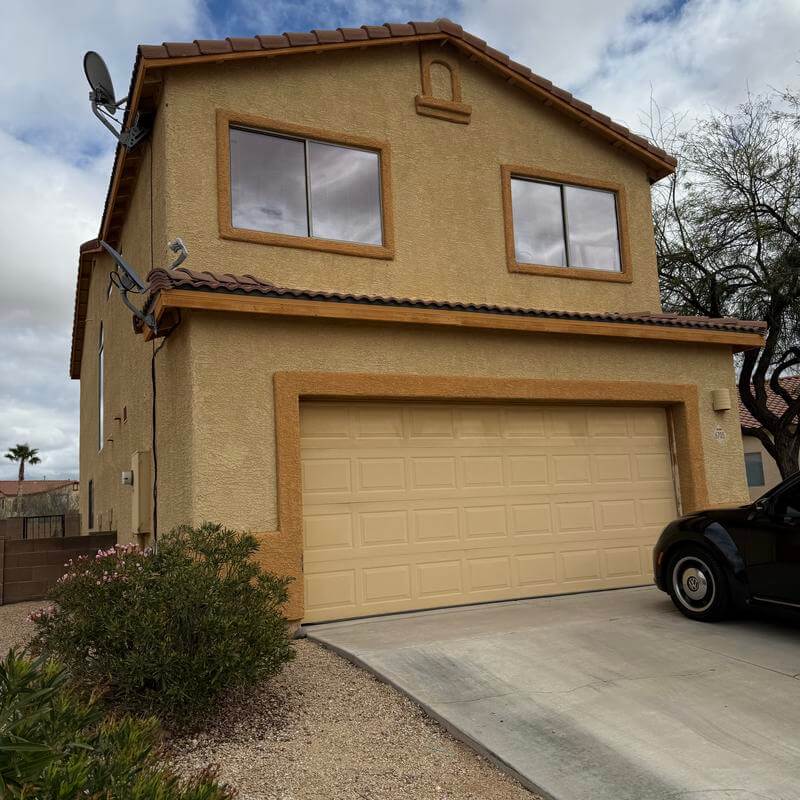







What Is Exterior Stucco Restoration?
Stucco restoration is not the same as routine maintenance. Washing your exterior or touching up a small scuff is considered routine stucco maintenance.
Restoration, however, is the process of bringing stucco back to sound, functional condition after it has been compromised by age, weather, moisture, or physical damage.
The goals are straightforward: structural integrity, reliable weather resistance, and a finished appearance that holds up over time.
However, “restoration” covers several different scopes of work.
- Repair addresses isolated, localized damage.
- Refinishing applies a new coating to protect and refresh a structurally sound surface.
- Resurfacing adds a new layer of stucco material to restore a uniform appearance across a larger area.
Restoration is necessary when stucco has aged past the point of reliable performance or when climate exposure has accelerated deterioration.
In the Tucson area, extreme heat, intense UV radiation, monsoon moisture, and wide temperature swings put stucco under constant stress, making timely intervention especially important.
Common Signs Your Stucco Needs Attention
Not all stucco damage is obvious at first glance. Knowing what to look for allows you to act before a manageable problem turns into a costly one.
In addition to performance, exterior condition also directly affects how a home is perceived on the market.
According to Liz Stoughton, a Marana REALTOR and founder of Your Marana:
“In Southern Arizona, buyers absolutely notice the condition of a home’s stucco right away. Well-maintained stucco signals that the home has been properly cared for, while visible cracks or fading can raise concerns about larger underlying issues.”
Cracks in Stucco (Hairline vs. Structural)
Hairline cracks are cracks that are less than 1/16 of an inch wide. These are often cosmetic and are common in stucco that has expanded and contracted through temperature cycles.
Wider cracks, stair-step patterns along mortar joints, or cracks near windows and door frames are more serious. These can indicate foundation settling, moisture infiltration, or a compromised substrate.
Cosmetic cracks need sealing; structural cracks need diagnosis before any surface work begins.
Discoloration, Stains, and Fading
Uniform color loss from UV exposure is expected over time. Uneven fading, rust-colored streaks from windows or soffits, and dark mold or mildew patches signal that water is moving across or beneath the surface in ways it shouldn’t be.
These issues affect long-term performance, not just appearance.
Bulging, Warping, or Soft Spots
Stucco that feels soft when pressed, bows outward, or sounds hollow when tapped likely has trapped moisture between the finish and the substrate.
This often means the lath, sheathing, or framing behind the stucco has been affected, which is a serious condition that worsens quickly if left unaddressed.
Peeling or Flaking Finish
Peeling indicates a failing topcoat or moisture working through from behind. Once the protective finish coat is compromised, the layers beneath are exposed to the elements, and deterioration accelerates.
Stucco Repair: When a Simple Fix Is Enough
Stucco repair addresses damage in a specific area without disturbing the rest of the exterior. It involves cleaning out damaged sections, applying compatible patching material, blending texture, and sealing cracks or voids to keep moisture out.
When To Choose Stucco Repair
Repair is the right solution when damage is limited in scope, such as small or hairline cracks with no moisture intrusion, minor chips from impact damage, and isolated deterioration where the surrounding stucco is structurally sound.
Benefits of Stucco Crack Repair
Repairing stucco is the most cost-effective option available, requires less labor and fewer materials, and can typically be completed quickly. Sealing cracks and patching damage early prevents moisture from reaching the substrate and stops small problems from becoming large ones.
Limitations of Stucco Repair
Patched areas may not match existing texture or color perfectly, particularly on weathered stucco. More importantly, repair is inadequate if an underlying issue hasn’t been identified and addressed. Patching over a symptom without treating the cause produces short-lived results.
Stucco Refinishing: Enhancing and Protecting Your Exterior
Stucco refinishing involves applying a fresh coat of paint or, more commonly, an elastomeric coating over existing stucco that is structurally sound but in need of renewed protection.
Elastomeric coatings are built specifically for masonry and stucco surfaces and are thick, flexible, and waterproof.
When To Choose Stucco Exterior Refinishing
Refinishing restores protection and appearance without the cost of more extensive work. Stucco refinishing is the right move when stucco is structurally solid with no significant cracks, no moisture intrusion, and no substrate issues but the finish has faded, chalked, or worn down.
Benefits of Stucco Refinishing
A quality elastomeric coating improves resistance to UV damage, wind-driven rain, and temperature swings while opening up a full range of color options.
For properties with sound stucco covered with a coating that has simply aged out of its service life, refinishing delivers strong results at a reasonable cost.
Limitations of Stucco Refinishing
Refinishing does not repair stucco cracks or fix anything beneath the surface. Applying a coating over compromised stucco may conceal damage temporarily but will not stop continued deterioration. As with any other coating, refinished stucco will need periodic recoating to keep performing.
When Stucco Resurfacing Is the Best Choice
Resurfacing applies a new layer of stucco material directly over the existing surface, adding actual thickness and texture rather than just a coating. It requires thorough preparation, including cleaning, crack repair, and ensuring solid adhesion between old and new material.
When To Choose Stucco Resurfacing
Resurfacing suits stucco with widespread cosmetic damage, such as multiple cracks across a large area, significant texture loss, or an aged surface that no longer holds coating reliably. The base must be structurally sound.
When the bones are solid but the finish has degraded beyond what refinishing can correct, resurfacing is the right call.
Benefits of Stucco Resurfacing
A well-executed resurfacing job transforms a home’s exterior, creates a uniform fresh appearance, eliminates the patchwork look of repeated spot repairs, and extends the stucco system’s lifespan, all at a fraction of the cost of full replacement.
Limitations of Stucco Resurfacing
Resurfacing stucco cannot correct deep structural damage, moisture intrusion, or a compromised substrate. If the base stucco has delaminated or the framing has been damaged by moisture, resurfacing over it will fail. Surface preparation is critical.
Stucco Repair vs. Resurface vs. Refinish: How To Choose
Each restoration method solves a different problem, and the right choice depends on what exact issues your stucco has. Applying the wrong solution wastes money at best and accelerates damage at worst.
Basic Guidelines
| Condition | Best Solution |
|---|---|
| Small, isolated cracks or minor damage | Repair |
| Structurally sound stucco with faded finish | Refinishing |
| Widespread cracking or texture loss, sound base | Resurfacing |
| Moisture intrusion or substrate damage | Repair first, then assess |
| Soft spots, bulging, or hollow sections | Professional inspection required |
Key Factors To Consider
The table above gives a starting point, but the full picture requires weighing several variables specific to your home and situation. These are the factors that most consistently determine which approach makes sense.
- Extent of damage: Isolated damage points to repair. Widespread surface deterioration calls for resurfacing. Finish wear without structural issues is a refinishing scenario.
- Age of stucco: Stucco 20 or more years old may have micro-cracking and surface fatigue that makes resurfacing a better long-term investment than repeated spot repairs.
- Budget: Repair carries the lowest upfront cost. Refinishing is a moderate investment. Resurfacing costs more but extends the system’s lifespan accordingly.
- Climate: Tucson’s UV intensity, monsoon moisture, and daily temperature swings accelerate wear faster than milder climates. Proactive restoration timelines matter here.
Stucco Restoration Cost: What To Expect
The three restoration approaches fall into clear cost tiers, based on how much of the stucco system is being addressed and the level of labor involved.
- Stucco Repair Cost: Repair is the most affordable option. Hairline cracks or small patches can cost $200 to $1,000, while deep cracks, moisture damage, or larger sections typically range from $1,000 to $4,000+ ($10 to $60/sq. ft.).
- Stucco Refinishing Cost: Refinishing sits in the mid-range. Costs typically range from $3 to $9 per sq. ft. or about $2,500 to $7,500+ for a full exterior, depending on home size and stucco recoating type.
- Stucco Resurfacing Cost: Resurfacing is more extensive and therefore more expensive. Most projects range from $4,000 to $12,000+, with costs often landing around $6 to $14 per sq. ft., depending on prep work and materials.
Factors That Affect Cost
Several variables influence the final cost of a stucco project, but square footage is the most consistent driver. Larger surfaces require more materials and labor, naturally increasing the overall price.
The condition of the existing stucco also impacts price, as minor surface wear is far less labor-intensive than repairing deep cracks or moisture damage.
Material and labor quality are equally important, especially in Arizona’s harsh desert climate, where lower-grade products tend to fail more quickly under intense sun and heat.
Accessibility can also affect pricing, as multi-story homes or hard-to-reach areas may require scaffolding or specialized equipment, adding to labor costs.
DIY vs. Professional Stucco Restoration
For minor hairline cracks with no signs of moisture or movement, a homeowner with basic repair knowledge can effectively fill and seal cracks with compatible exterior caulk. Beyond that, however, the risks escalate quickly.
Misdiagnosing damage, using incompatible materials, or patching over moisture issues can make the underlying problem significantly worse and more expensive to fix correctly later.
Professional contractors bring accurate diagnosis, the right materials, and the skill to produce results that last.
Protecting Your Home With the Right Stucco Solution
Waiting too long is consistently the most expensive decision homeowners make with stucco.
A hairline crack addressed early costs a fraction of what it costs once moisture has reached the framing. The sooner damage is correctly identified and treated, the more options you have and the lower the cost.
If you’re not sure what your stucco needs, a professional inspection from a local stucco restoration company is the right first step.